The Evolving Risk Landscape: Why Collaboration Matters More Than Ever

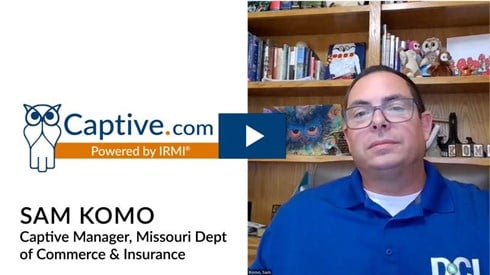
Martin "Sam" Komo , Missouri Captive Domicile | June 09, 2026

Risk management has never been a static discipline. Over the past decade, organizations have navigated an increasingly complex environment shaped by economic uncertainty, technological disruption, cyber threats, workforce challenges, regulatory changes, and emerging geopolitical risks. While the nature of these exposures continues to evolve, one reality has become increasingly clear: No organization can effectively address today's risk landscape alone.
The traditional model of managing risk within organizational silos is giving way to a more collaborative approach. Risk managers, captive owners, self-insured organizations, brokers, regulators, and service providers are recognizing that shared knowledge and collective problem-solving often lead to better outcomes than isolated decision-making. As risks become more interconnected, collaboration is becoming one of the most valuable tools available to risk professionals.
One area where this shift is particularly evident is the growing use of alternative risk financing strategies. Captive insurance programs, self-insurance structures, and other customized risk solutions require a diverse network of experts working together. Successful programs depend on the coordination of actuaries, attorneys, accountants, regulators, claims professionals, and risk managers. The result is a more strategic approach to risk that focuses not only on transferring exposures but also on understanding and controlling the risk.
Technology has further accelerated the need for collaboration. Artificial intelligence, predictive analytics, and advanced data tools provide organizations with unprecedented access to information. However, data alone does not create better decisions. Real value emerges when professionals from different disciplines come together to interpret information, challenge assumptions, and develop practical solutions. Organizations that foster these conversations are often better positioned to identify emerging threats before they become significant problems.
At the same time, workforce challenges continue to impact the risk profession. Many organizations face succession planning concerns as experienced professionals retire and institutional knowledge leaves with them. Building stronger professional networks and creating opportunities for mentorship and education have become essential for developing the next generation of risk leaders. Industry events, educational partnerships, and professional associations play a critical role in ensuring knowledge is shared and expertise continues to grow.
The Midwest is uniquely positioned to demonstrate the power of collaboration. The region has a strong tradition of business innovation, practical problem-solving and relationship-driven leadership. These characteristics have helped drive the growth of regional initiatives focused on connecting risk professionals across industries and organizational structures.
One example is the Mid Rivers Risk Forum, which returns to St. Louis on October 5–6, 2026. The forum was created to bring together risk managers, captive insurance professionals, self-insured organizations, service providers, and regulators to exchange ideas and build lasting professional relationships. Since its launch, the event has focused on advancing risk leadership across the Midwest by encouraging meaningful dialogue around emerging challenges and innovative solutions.
The 2026 forum reflects the continued growth of this collaborative vision through the addition of new partners, including Missouri State University and the Missouri Self-Insurers Association. Missouri State University's involvement strengthens the educational component of the event and helps connect future professionals with industry leaders. Meanwhile, the Missouri Self-Insurers Association brings decades of experience supporting self-insured employers through education, advocacy, networking, and industry collaboration.
As organizations continue to face an expanding range of risks, the ability to collaborate effectively will become an increasingly important competitive advantage. The future of risk management will not be defined solely by new technologies or innovative financing structures. It will be defined by the relationships, partnerships, and professional communities that help organizations navigate uncertainty together.
In an environment where change is constant, collaboration is no longer optional; it is essential.
For more information on Mid Rivers Risk Forum visit the forum's website, or to become a member of the Mid Rivers Risk Community, fill out the online application.
Martin "Sam" Komo , Missouri Captive Domicile | June 09, 2026