

Swiss Re: H1 Catastrophe Losses Fall as Wildfire Risk Rises

August 12, 2026
Global insured natural catastrophe losses totaled an estimated $42 billion in the first half of 2026, 16 percent below the 10-year average and the lowest first-half total since 2020, according to Swiss Re Institute.
Severe convective storms remained the largest source of insured natural catastrophe losses, generating an estimated $28 billion. Although storm activity across the US was above average, insured losses remained below the long-term trend because relatively few of the highest-impact events struck Texas, the Southern Plains, and the Southeast, areas where frequent storms and high concentrations of insured assets typically produce significant losses.
Overall economic losses from natural catastrophes and human-made events reached $107 billion during the first half, 9 percent below the 10-year average of $119 billion. Total insured losses were $48 billion, including $42 billion from natural catastrophes and $6 billion from human-made events.
Insurance covered about 42 percent of first-half economic losses, compared with a 30-year average of 33 percent. Swiss Re attributed the higher share to damage concentrated in highly insured markets and involving widely covered perils.
The Venezuela earthquake sequence, by comparison, caused an estimated $20 billion in economic losses. Swiss Re said no reliable insured-loss estimate is available, but low insurance penetration suggests only a small portion of the damage will be insured.
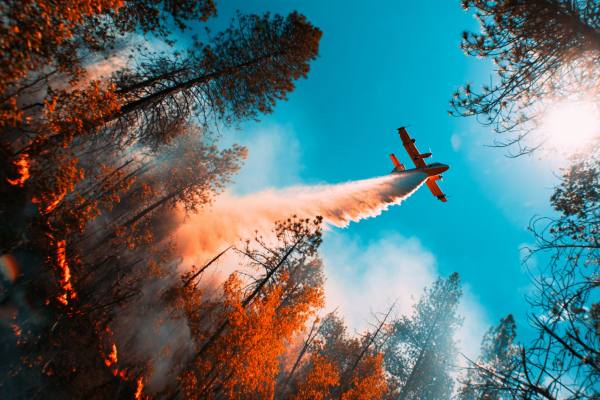
Despite relatively moderate first-half losses, Swiss Re warned that catastrophe risk remains elevated, particularly as extreme heat and dry conditions increase wildfire exposure.
"A less costly first half of the year does not mean the risk has gone away. One major hurricane, earthquake, or wildfire can quickly change the picture. Europe's recent wildfires highlight how hotter and drier conditions are making large wildfires more likely and, with more homes, businesses, and infrastructure built in risk-exposed areas, also more costly," Balz Grollimund, head catastrophe perils at Swiss Re, said.
Europe, the world's fastest-warming continent, now experiences 64 percent more hot days—defined as days with maximum temperatures of at least 30 degrees Celsius—than it did in the 1950s. Record heat in western Europe in June, combined with persistent dry conditions, contributed to an environment conducive to wildfires. Major fires affected France and Spain in July.
Although wildfires historically have accounted for a relatively small portion of insured losses in Europe, Swiss Re Institute identified wildfire as the fastest-growing weather peril globally. European insured wildfire losses have increased an estimated 8 percent to 11 percent annually in real terms since 1970.
The early start to Europe's wildfire season reflects changing hazards, with fire seasons becoming longer and wildfire conditions occurring more frequently in areas that historically faced less exposure.
Second-half catastrophe losses also remain a significant consideration. Historically, 58 percent of annual global insured natural catastrophe losses occur during the second half of the year, driven largely by North Atlantic hurricanes.
Although El Niño conditions tend to suppress Atlantic hurricane activity, Swiss Re said 22 percent of US hurricane landfalls since 1950 have occurred during El Niño conditions. El Niño also may affect tropical cyclone activity in the Central and East Pacific and influence floods, wildfires, and other weather extremes elsewhere.
Swiss Re said longer-term catastrophe loss drivers include growing concentrations of property and infrastructure in hazard-prone areas and rising reconstruction costs.
August 12, 2026




