Severe Convective Storms Now Costliest Insured Peril Globally

January 20, 2026
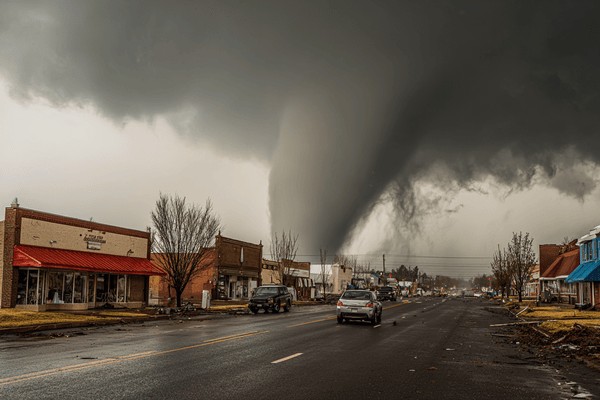
Severe convective storms have overtaken tropical cyclones as the costliest insured peril of the 21st century, according to Aon's 2026 Climate and Catastrophe Insight report. The report, released by Aon plc, found that insured losses from these storms totaled $61 billion in 2025, making it the third-highest annual total on record for the peril. High-frequency, high-severity storm outbreaks in the US were the primary driver.
The report recorded global economic losses of $260 billion in 2025, the lowest since 2015. However, insured losses remained high at $127 billion, marking the sixth consecutive year insurers paid more than $100 billion. In many regions, especially emerging markets, insurance coverage remained limited—51 percent of economic losses were uninsured, despite the protection gap being at its lowest level on record.
Wildfires also contributed significantly to 2025's totals. California's Palisades and Eaton Fires caused $58 billion in economic damage and $41 billion in insured losses, the costliest wildfires ever recorded globally. Other notable events included the Myanmar earthquake, which caused $15.7 billion in losses and 5,456 deaths, and extreme heat events responsible for over 25,000 fatalities. Global disaster-related fatalities totaled 42,000, 45 percent below the 21st-century average.
Aon's report identified 49 economic-loss events surpassing $1 billion and 30 insured-loss events exceeding $1 billion—well above the historical averages of 46 and 17, respectively. These trends reflect a rise in midsized catastrophes that, in aggregate, result in major losses for insurers.
In the United States, wildfires and convective storms drove more than 54 percent of global economic losses, with insured losses totaling $103 billion—81 percent of the global insurance industry's total for the year. In the broader Americas, Hurricane Melissa generated $11 billion in damages across Jamaica, Cuba, and other territories, with only $2.5 billion insured. Brazil experienced $5 billion in agricultural losses due to drought, and major floods impacted Mexico, Ecuador, and Bolivia.
In the Europe, Middle East, and Africa regions, economic losses were below the long-term average, although droughts, heatwaves, and wildfires continued to affect southern Europe. Convective storms remained the top insured peril. Across the Asia-Pacific region, major losses were tied to the Myanmar earthquake, flooding in China, and tropical cyclones in South and Southeast Asia. Australia recorded two insured-loss events surpassing $1 billion.
The report emphasized the growing importance of alternative risk transfer, especially parametric insurance, in managing climate-related losses. For example, Jamaica accessed over $650 million in liquidity within 2 months of Hurricane Melissa through a catastrophe bond tied to a parametric trigger.
January 20, 2026